



Blog

  • How Modern Medicine Is Changing Patient Care

    How Modern Medicine Is Changing Patient Care

    Modern medicine is no longer defined solely by the drugs we prescribe or the surgeries we perform. It is increasingly defined by how care is delivered, coordinated, and personalized. Over the past two decades, a convergence of digital infrastructure, data science, and patient-centered philosophy has reshaped the clinical encounter from a episodic, physician-led transaction into a continuous, collaborative relationship. (more…)

  • How Lifestyle Can Affect Disease Risk: A Data-Driven Perspective for the Modern Tech Era

    How Lifestyle Can Affect Disease Risk: A Data-Driven Perspective for the Modern Tech Era

    In an age defined by continuous connectivity, artificial intelligence, and precision medicine, the conversation around health has shifted from reactive treatment to proactive prediction. The modern professional understands that disease risk is not merely a matter of genetics—it is a dynamic equation shaped by daily choices, environmental inputs, and behavioral patterns. (more…)

  • Common Preventive Tests and What They Detect

    Common Preventive Tests and What They Detect

    Preventive healthcare is built on a simple principle: identify problems before they become crises. In an era where digital health records, wearable sensors, and AI-assisted diagnostics are reshaping how we monitor our bodies, the value of routine medical testing has never been clearer. Yet many people remain uncertain about which tests matter, when to schedule them, and what the results actually reveal. (more…)

  • How to Read a Medication Label Correctly

    How to Read a Medication Label Correctly

    Medication labels are among the most consequential pieces of technical documentation a person will ever encounter. Unlike a software license agreement or a device manual, a medication label governs decisions that directly affect human physiology, and errors in interpretation can produce adverse events ranging from mild discomfort to hospitalization. (more…)

  • How Doctors Assess Individual Health Risks: A Deep Dive into Modern Clinical Decision-Making

    How Doctors Assess Individual Health Risks: A Deep Dive into Modern Clinical Decision-Making

    In an era defined by data abundance, the practice of medicine has shifted from a purely reactive discipline to a proactive, predictive science. The question is no longer simply “What is wrong?” but rather “What is likely to go wrong, and how can we prevent it?” This evolution hinges on a sophisticated, multi-layered process known as individual health risk assessment. (more…)

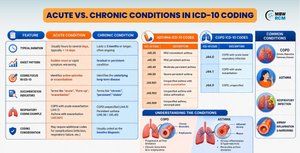
  • Acute vs Chronic Conditions: Key Differences and Why They Matter

    Acute vs Chronic Conditions: Key Differences and Why They Matter

    In healthcare, technology, and health informatics, few distinctions carry as much weight as the one between acute and chronic conditions. This classification shapes clinical decision-making, reimbursement models, software design, patient engagement strategies, and public health policy. For technologists building digital health platforms, for clinicians documenting care, and for anyone navigating the modern healthcare system, a precise understanding of these two categories is not optional—it is foundational. (more…)

  • The Role of Lifestyle in Disease Prevention: How Everyday Choices Shape Long-Term Health

    The Role of Lifestyle in Disease Prevention: How Everyday Choices Shape Long-Term Health

    In the modern healthcare landscape, technology has delivered remarkable advances in diagnostics, therapeutics, and precision medicine. Yet despite these innovations, one truth remains unchanged: the most powerful determinants of long-term health are not found in a hospital or a pharmacy. They are found in the daily decisions individuals make about how they eat, move, sleep, and manage stress. (more…)

  • What Is General Medicine and What Does It Cover?

    What Is General Medicine and What Does It Cover?

    General medicine is the foundation of every functional healthcare system. It is the entry point for patients navigating an increasingly complex medical landscape, and it serves as the connective tissue between specialized care, preventive health, and long-term wellness management. For technology professionals building digital health platforms, electronic health records, or telemedicine infrastructure, understanding general medicine is not optional—it is essential. (more…)

  • Preventive Care: What Patients Should Know

    Preventive Care: What Patients Should Know

    Preventive care represents one of the most powerful and cost-effective tools in modern medicine. Rather than waiting for symptoms to appear, preventive care focuses on maintaining health, identifying risk factors early, and stopping disease before it takes hold. For patients navigating an increasingly complex healthcare landscape, understanding what preventive care includes, why it matters, and how to access it is essential. (more…)

  • Common Types of Medications Explained: A Comprehensive Guide to Pharmaceutical Classes

    Common Types of Medications Explained: A Comprehensive Guide to Pharmaceutical Classes

    Modern medicine relies on an extensive pharmacopoeia of therapeutic agents, each engineered to address specific physiological targets. Understanding the major categories of medications empowers patients, caregivers, and technology professionals working in healthcare to make informed decisions. This guide breaks down the most common types of medications, their mechanisms, and their clinical applications. (more…)