
Receiving a prescription for a new medication is a routine moment in modern healthcare, yet it is anything but trivial. Every pharmaceutical product, from a common antibiotic to a specialized biologic, carries a unique profile of benefits, risks, and interactions. For patients, the difference between a safe therapeutic experience and a harmful one often comes down to preparation and understanding. (more…)
Category: Medications
-

How Prescription Medications Work: A Technical Overview of Pharmacokinetics and Pharmacodynamics
Prescription medications represent one of modern medicine’s most sophisticated achievements. Unlike over-the-counter remedies, these compounds are engineered to interact with specific biological targets at the molecular level, and they are dispensed only under professional supervision because their mechanisms of action, dosing thresholds, and interaction profiles demand precision. (more…)
-

How Medical Research Is Improving Disease Management
Medical research has always been the engine behind clinical progress, but the pace and precision of that progress have accelerated dramatically over the past two decades. What once took a generation to move from laboratory bench to patient bedside now happens in years, sometimes months. For patients living with chronic and complex conditions, this shift is not abstract. (more…)
-

Understanding Symptoms, Causes, and Treatment Options
In the modern technology landscape, few challenges demand as much diagnostic precision as identifying and resolving system-level failures. Whether we are examining a distributed cloud architecture, a consumer-facing application, or an embedded device, the fundamental discipline remains the same: observe the symptoms, trace the root cause, and apply the correct treatment. (more…)
-

Why Early Diagnosis Matters for Many Diseases
In modern medicine, the difference between a routine treatment plan and a life-altering crisis often comes down to a single factor: time. Early diagnosis is not merely a clinical preference; it is the pivotal variable that determines patient outcomes, reduces healthcare costs, and expands the range of available therapeutic options. (more…)
-

How Lifestyle Can Affect Disease Risk: A Data-Driven Perspective for the Modern Tech Era
In an age defined by continuous connectivity, artificial intelligence, and precision medicine, the conversation around health has shifted from reactive treatment to proactive prediction. The modern professional understands that disease risk is not merely a matter of genetics—it is a dynamic equation shaped by daily choices, environmental inputs, and behavioral patterns. (more…)
-

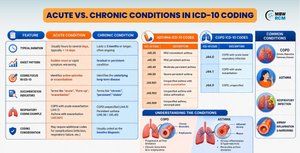
Acute vs Chronic Conditions: Key Differences and Why They Matter
In healthcare, technology, and health informatics, few distinctions carry as much weight as the one between acute and chronic conditions. This classification shapes clinical decision-making, reimbursement models, software design, patient engagement strategies, and public health policy. For technologists building digital health platforms, for clinicians documenting care, and for anyone navigating the modern healthcare system, a precise understanding of these two categories is not optional—it is foundational. (more…)