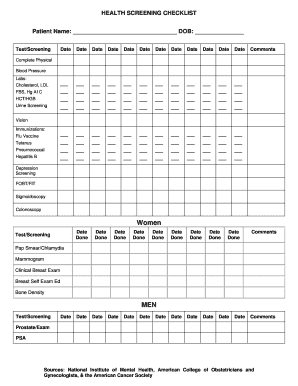
Preventive healthcare represents one of the most powerful tools available to women seeking to protect their long-term wellbeing. While advances in medical technology continue to reshape how clinicians detect and treat disease, the fundamental principle remains unchanged: early identification saves lives. (more…)
Category: Blog
-

How Mental Health Treatment Plans Are Developed
Mental health treatment is not a one-size-fits-all endeavor. Unlike a straightforward prescription for an antibiotic, psychological care must account for a complex interplay of biology, environment, personal history, and individual goals. The tool that makes this personalization possible is the treatment plan. (more…)
-

Why Early Mental Health Support Matters: A Technical and Human Perspective
In an era defined by always-on connectivity, distributed workforces, and algorithmic pressure, mental health has evolved from a peripheral HR concern into a core component of organizational resilience and individual performance. For technology professionals, the stakes are particularly high. The same cognitive faculties that drive innovation—focus, problem-solving, sustained attention—are the first to degrade when psychological well-being is neglected. (more…)
-

Evidence-Based Approaches to Mental Health Care: A Professional Framework for Modern Practice
Mental health care has undergone a profound transformation over the past several decades. Where once clinical practice relied heavily on intuition, tradition, and anecdotal observation, today’s most rigorous providers ground their work in evidence-based approaches—interventions validated through systematic research, controlled trials, and reproducible outcomes. (more…)
-

How Sleep and Mental Health Are Connected
In the fast-paced world of modern technology, sleep is often treated as an optional luxury — something to sacrifice in favor of productivity, entertainment, or one more episode of a streaming series. Yet a growing body of research makes one thing unmistakably clear: sleep and mental health are deeply, bidirectionally connected. (more…)
-

Navigating the Landscape of Mental Health Care: A Guide to the Different Types of Mental Health Professionals
In the rapidly evolving landscape of modern healthcare, understanding the distinct roles of mental health professionals is akin to understanding the difference between a software architect and a front-end developer. While they all operate within the same ecosystem—the human mind—their training, scope of practice, and methodologies vary significantly. (more…)
-

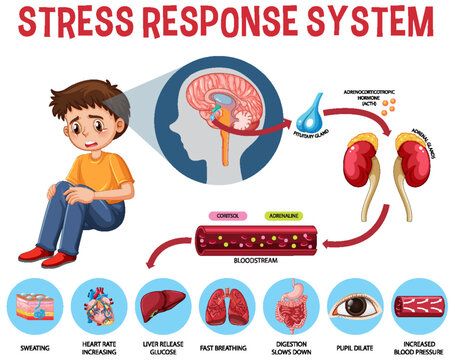
How Stress Can Affect Physical Health: A Technical Breakdown of the Body’s Response
In the realm of human physiology, stress is not merely a psychological state; it is a systemic biological event with measurable, often destructive, physical consequences. For technology professionals, biohackers, and health-conscious individuals, understanding the mechanics of stress is essential for optimizing performance and longevity. (more…)
-

Understanding Depression and Its Symptoms: A Technical Perspective on Mental Health
In an era where digital tools, artificial intelligence, and data-driven diagnostics are transforming every facet of healthcare, mental health remains one of the most complex frontiers. Depression is not a single malfunction in a biological machine; it is a multifaceted syndrome involving neural circuitry, neurochemistry, environmental inputs, and psychological feedback loops. (more…)
-

Common Signs of Anxiety and Stress: A Professional Guide for the Tech Industry
In the fast-paced world of technology, high performance is often the baseline expectation. Whether you are a software engineer debugging a critical production issue at 2 AM, a product manager navigating shifting roadmaps, or a founder pitching to investors, the pressure to deliver is relentless. While a certain amount of stress can sharpen focus and drive innovation, chronic anxiety and unmanaged stress can severely degrade cognitive function, creativity, and overall health. (more…)
-

When Should You Talk to a Mental Health Professional?
In the technology sector, we optimize systems, debug code, and monitor performance metrics with relentless precision. We build redundancy into our infrastructure and set up alerts for the slightest anomaly. Yet, when it comes to the most complex system we will ever operate—our own mind—we often ignore the warning logs until a critical failure occurs. (more…)