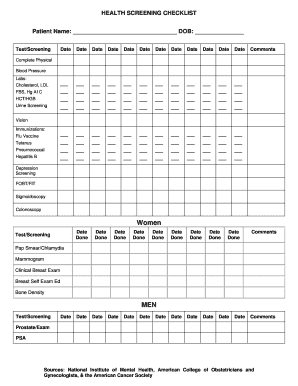

Common Preventive Tests and What They Detect
Preventive healthcare is built on a simple principle: identify problems before they become crises. In an era where digital health records, wearable sensors, and AI-assisted diagnostics are reshaping how we monitor our bodies, the value of routine medical testing has never been clearer. Yet many people remain uncertain about which tests matter, when to schedule them, and what the results actually reveal. This guide outlines the most common preventive tests, explains the conditions they are designed to catch, and offers a professional framework for understanding their role in long-term health management.
Why Preventive Testing Matters
According to the Centers for Disease Control and Prevention, chronic diseases such as heart disease, cancer, and diabetes account for the majority of deaths and healthcare costs in the United States. Most of these conditions develop silently over years. Preventive testing interrupts that trajectory by providing objective, measurable data that clinicians can act upon.
The goal is not to test indiscriminately. Rather, it is to apply evidence-based screening at the right intervals for the right populations. This approach reduces unnecessary procedures while maximizing early detection of treatable conditions.
Core Preventive Tests by Category
1. Blood Pressure Screening
Blood pressure measurement is the simplest and most frequently performed preventive test. It detects hypertension, often called the “silent killer” because it typically produces no symptoms until serious damage has occurred.
- What it detects: Elevated arterial pressure, risk of stroke, heart attack, kidney disease, and vascular dementia.
- Recommended frequency: At least once per year for adults with normal readings; more often if values are elevated.
- Technology note: Digital oscillometric devices and ambulatory monitors now allow continuous 24-hour tracking, improving diagnostic accuracy.
2. Lipid Panel (Cholesterol Test)
A lipid panel measures total cholesterol, LDL, HDL, and triglycerides. It is a cornerstone of cardiovascular risk assessment.
- What it detects: Dyslipidemia, atherosclerosis risk, metabolic syndrome, and inherited lipid disorders.
- Recommended frequency: Every four to six years for average-risk adults; annually for those with known risk factors.
- Technology note: Advanced lipid testing now includes ApoB and Lp(a), offering more granular risk stratification.
3. Blood Glucose and HbA1c Testing
These tests screen for prediabetes and type 2 diabetes. HbA1c reflects average blood sugar over the previous two to three months, making it more reliable than a single fasting glucose reading.
- What it detects: Insulin resistance, prediabetes, diabetes, and associated metabolic dysfunction.
- Recommended frequency: Every three years starting at age 35; earlier and more frequently for individuals with obesity or family history.
- Technology note: Continuous glucose monitors are increasingly used in preventive contexts, even among non-diabetics.
4. Colorectal Cancer Screening
Colorectal cancer is highly treatable when detected early. Screening options include colonoscopy, stool-based tests, and CT colonography.
- What it detects: Precancerous polyps, colorectal cancer, and other intestinal abnormalities.
- Recommended frequency: Colonoscopy every ten years, or stool-based testing annually, beginning at age 45.
- Technology note: AI-assisted polyp detection during colonoscopy has improved adenoma detection rates significantly.
5. Mammography
Mammography remains the primary imaging tool for breast cancer screening. Digital breast tomosynthesis (3D mammography) has improved both sensitivity and specificity.
- What it detects: Breast cancer, microcalcifications, and suspicious masses before they are palpable.
- Recommended frequency: Every one to two years for women aged 40 to 74, depending on risk profile.
- Technology note: AI-assisted mammography is now FDA-cleared in several systems, reducing false positives.
6. Cervical Cancer Screening (Pap and HPV Testing)
Cervical screening has evolved from cytology alone to combined Pap and high-risk HPV testing.
- What it detects: Cervical dysplasia, HPV infection, and early cervical cancer.
- Recommended frequency: Every three years with Pap alone, or every five years with co-testing, for women aged 21 to 65.
- Technology note: Self-collection HPV kits are expanding access in underserved populations.
7. Prostate-Specific Antigen (PSA) Test
PSA testing remains controversial due to overdiagnosis concerns, but it is still widely used for shared decision-making in prostate cancer screening.
- What it detects: Prostate cancer, benign prostatic hyperplasia, and prostatitis.
- Recommended frequency: Discuss with a clinician starting at age 50, or age 45 for high-risk men.
- Technology note: Multiparametric MRI and PSA density calculations reduce unnecessary biopsies.
8. Bone Density Scan (DEXA)
Dual-energy X-ray absorptiometry measures bone mineral density and is the standard for diagnosing osteoporosis.
- What it detects: Osteopenia, osteoporosis, and fracture risk.
- Recommended frequency: Every two years for women aged 65 and older, or earlier with risk factors.
- Technology note: Trabecular bone score and FRAX algorithms enhance fracture prediction.
9. Lung Cancer Screening (Low-Dose CT)
Low-dose computed tomography is recommended for high-risk individuals with significant smoking history.
- What it detects: Early-stage lung cancer, pulmonary nodules, and emphysema.
- Recommended frequency: Annually for adults aged 50 to 80 with a 20 pack-year smoking history.
- Technology note: AI-based nodule detection and radiomics are improving diagnostic precision.
10. Vision and Hearing Tests
Sensory screenings are often overlooked but are critical for quality of life and safety.
- What they detect: Glaucoma, macular degeneration, cataracts, hearing loss, and balance disorders.
- Recommended frequency: Every two to four years for adults; annually after age 60.
- Technology note: Portable audiometry and retinal imaging are now available in primary care settings.
Summary Table of Preventive Tests
| Blood Pressure Screening | Hypertension | Annually |
| Lipid Panel | Dyslipidemia | Every 4–6 years |
| HbA1c / Glucose | Diabetes | Every 3 years |
| Colonoscopy | Colorectal Cancer | Every 10 years |
| Mammography | Breast Cancer | Every 1–2 years |
| Pap / HPV | Cervical Cancer | Every 3–5 years |
| PSA | Prostate Cancer | Shared decision |
| DEXA | Osteoporosis | Every 2 years |
| Low-Dose CT | Lung Cancer | Annually |
| Vision / Hearing | Sensory Impairment | Every 2–4 years |
How to Build a Personalized Preventive Testing Plan
No single schedule fits everyone. A rational preventive strategy accounts for age, sex, family history, lifestyle, and existing conditions. Consider the following framework:
The Bottom Line
Preventive testing is not about finding disease for its own sake. It is about shifting the point of detection earlier, when intervention is simpler, less invasive, and more effective. The tests described above represent the foundation of modern preventive medicine. When combined with thoughtful risk assessment and emerging diagnostic technologies, they offer a practical path to longer, healthier lives.
Individuals should consult a qualified healthcare provider to determine which tests are appropriate for their specific circumstances. The information here is intended for educational purposes and does not replace professional medical advice.